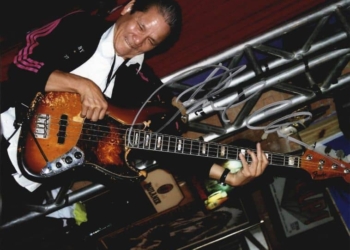
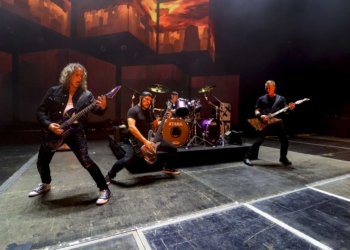
Stu “Bassie” Brooks made his live debut with Nine Inch Nails on February 5 at the Smoothie King Center in New Orleans, stepping onstage with Trent Reznor and the band for the first time. For NIN fans, it marked the start of a new low-end era.
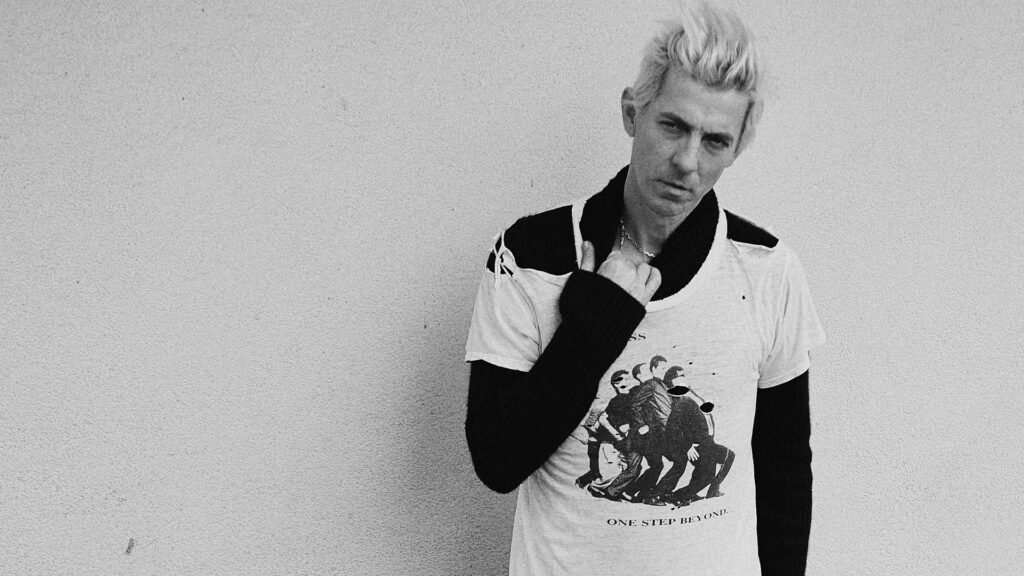
From Dub to Gaga to Nine Inch Nails
Brooks isn’t some last-minute fill-in. His résumé is deep.
He co-founded Dub Trio, a band known for heavy, spacious, effects-drenched grooves. Outside of that world, he’s worked with major artists like Lady Gaga, Mary J. Blige, Lauryn Hill, and 50 Cent. He’s even sat in with the band on Saturday Night Live, which tells you he can handle pressure and tight live TV turnarounds.
You might also recognize his playing from Danny Elfman’s 2021 solo record Big Mess. That project alone shows how comfortable Brooks is in dark, cinematic, industrial-leaning territory. So in many ways, Nine Inch Nails makes perfect sense.
A 21-Song Trial by Fire
Reznor didn’t ease him in with a short set.
The New Orleans show ran 21 songs. It opened with “Something I Can Never Have” on the B-stage, brought back “Non-Entity” for the first time since 2009, and rolled through staples like “Wish,” “March of the Pigs,” and “Reptile.” That’s a serious endurance test for any bass player, especially on night one.
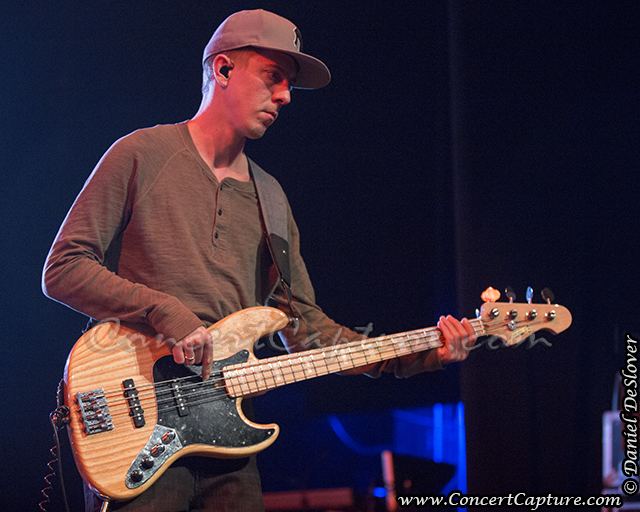
From a bass perspective, this gig is no joke. NIN’s catalog moves from fragile piano ballads to full-on industrial chaos. The bass has to sit deep and supportive one minute, then cut through walls of distortion the next.
What Kind of Bass Tone Is He Bringing?
If you’ve followed Brooks’ career, you already know his signature sound: thick, dubby, and unapologetically heavy. Think low-end that feels like it’s wrapped around you. He’s described it as “woofy, round, and sometimes wooly.” That tracks.
In a 2022 interview with EarthQuaker Devices, he broke down how he builds that tone. First step? Heavy flatwounds.
He’s a fan of La Bella 0760M Deep Talkin’ Bass 1954 Stainless Flat Wound 52–110 strings. Yes, 52–110. That’s serious tension. It’s also the same set famously used by James Jamerson. So we’re talking classic Motown DNA, but pushed through a modern dub and effects mindset.
For old-school reggae tones, Brooks has leaned on a Gibson EB-2 or a Höfner bass. For something more modern, he’ll grab a Fender Jazz Bass strung with flatwounds and run it through an Aguilar preamp. The common thread is warmth and mass. Nothing thin. Nothing polite.
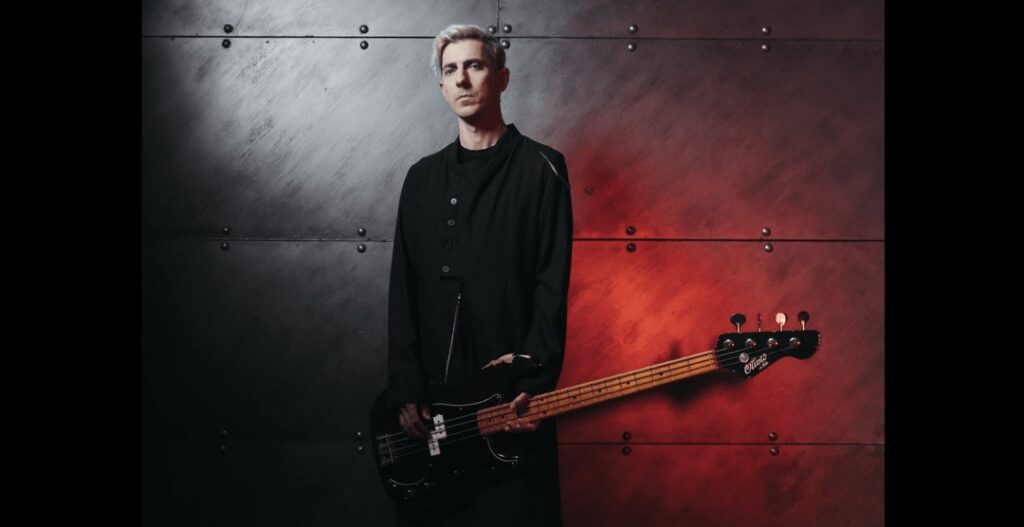
For a bass player, this is where it gets interesting. Nine Inch Nails isn’t a dub band. It’s industrial, mechanical, sometimes aggressive to the point of abrasion. So the question becomes: does that thick, Jamerson-inspired foundation get reshaped to fit NIN’s sharper edges?
Most likely, yes. And Brooks has the pedalboard to make that happen.
Not Afraid to Get Weird
With Dub Trio, Brooks wasn’t shy about experimenting. At times, he even ran the front-of-house mix through an EarthQuaker Devices Bit Commander. That’s a bold move. The Bit Commander is a monophonic analog octave fuzz, and it can get nasty in a hurry.
On their track “Noise” from the album IV, he called it one of the most brutal sounds he’d ever achieved with a band. That willingness to push into chaos feels very compatible with Reznor’s world.